On a new housing estate or business park, the solar street lights are usually chosen from a catalogue page and a price list. The poles and foundations that hold them get far less attention, yet they carry the whole system for twenty years or more. A good light on a weak pole, or a good pole on a poor foundation, can lean, crack or fall within a few seasons, and fixing it after residents move in is slow and expensive.
This article explains why poles and foundations deserve a proper place in the design of property projects, what developers and their engineers should specify, and how to check the work before handover.
Why Solar Street Light Poles Carry More Load
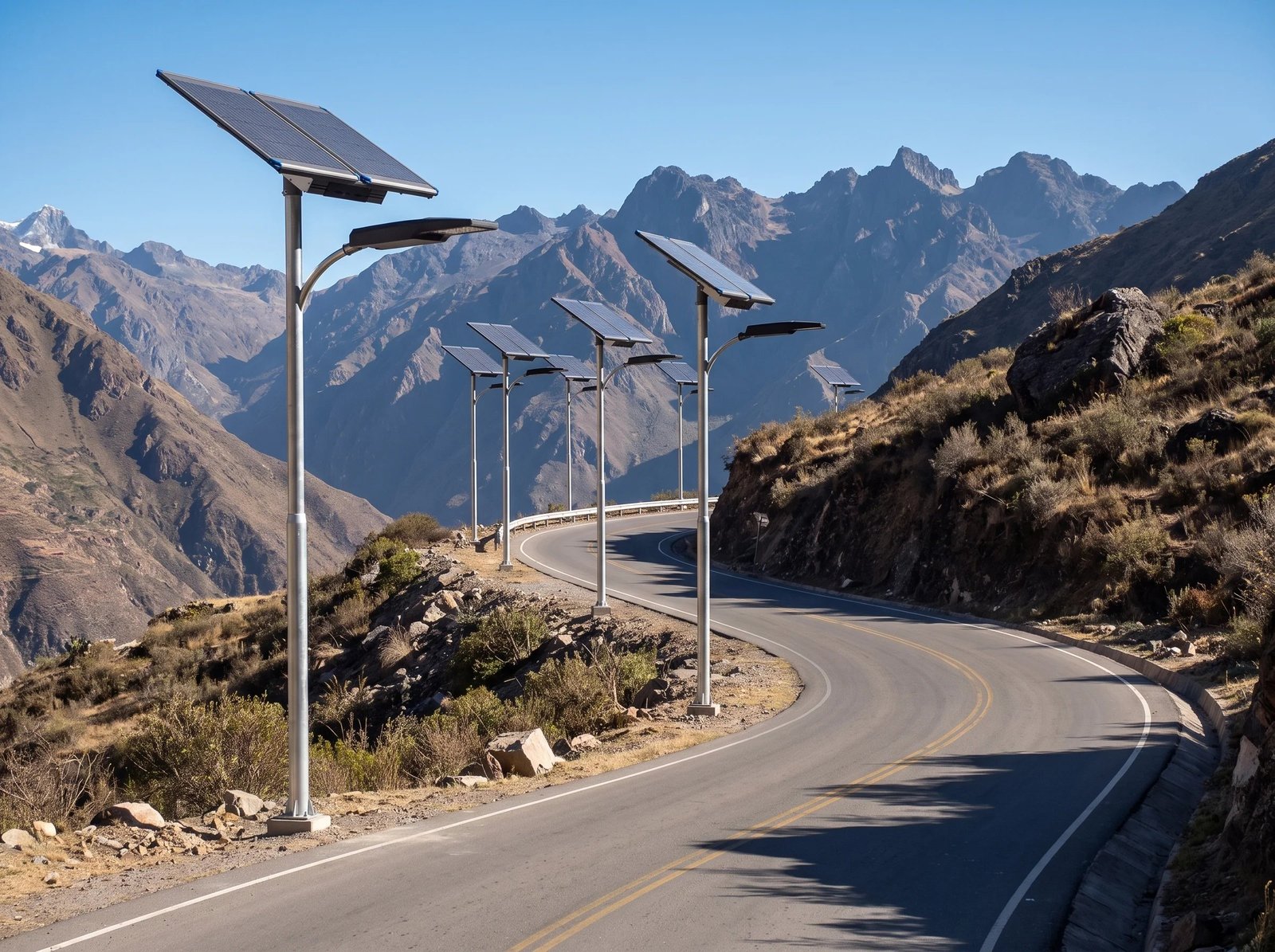
A conventional street light pole holds a light head and a cable. A solar street light pole also holds a solar panel and, depending on the design, a battery box or an integrated unit with the battery inside. The panel is a flat surface facing the sky, and in strong wind it behaves like a sail. That extra area and weight at the top of the pole increase the bending force at the base, which is exactly where the pole meets the foundation.
This is why a pole that works well for a grid-powered light of the same height may not be strong enough for a solar version. The pole has to be checked against the actual panel size, the weight of the equipment on top and the wind conditions at the site. In Europe, lighting columns are covered by the EN 40 series and wind actions by EN 1991-1-4. Other regions use their own codes, such as ASCE 7 in the United States, but the principle is the same everywhere: the design must be based on real loads, not on a standard catalogue size.
Choosing Pole Height, Material and Finish
Height
Pole height should follow the road layout rather than habit. Internal estate roads and cul-de-sacs often suit poles of around 6 to 8 metres, while wider entrance roads and boulevards may need 8 to 10 metres. Footpaths, parks and play areas usually work better with lower poles of 4 to 5 metres, which keep light close to the ground and reduce glare into homes. The right height is confirmed by a lighting calculation that also sets the spacing between poles.
Material and coating
Most solar street light poles are made from steel and protected by hot-dip galvanising to ISO 1461. A powder coat can be added on top for colour, which many developers want so the poles match the architecture of the project. In coastal locations, a heavier zinc coating, a duplex system or aluminium poles may be worth the extra cost because salt air attacks steel quickly. Wall thickness, the size of the base plate and the quality of welds all affect strength, so they should appear on the drawings rather than being left to the supplier.
A practical reference for these decisions is a detailed solar street light pole guide that walks through height, wall thickness, arm design and coating checks before purchase. Using a checklist like this helps the developer, the consultant and the contractor talk about the same things when comparing offers.
Designing the Foundation
Start with the soil
New developments often sit on filled or recently graded ground. Fill that has not been properly compacted can settle unevenly, and a pole foundation sitting in it will slowly tilt. The site’s geotechnical report should be used to size the foundations. If no report covers the lighting routes, a few simple tests along the road corridor cost little compared with replacing leaning poles later.
Anchor bolts and base plates
Most poles are fixed to a concrete foundation with a cage of anchor bolts. The bolt diameter, length and spacing must match the base plate of the chosen pole, so the pole supplier and the civil contractor need to agree on a drawing before any concrete is poured. A steel template keeps the bolts in the correct position during the pour. Galvanised bolts and nuts, a levelling nut arrangement and a grout or protective cap at the base all help the connection last.
Concrete size and curing
The foundation size depends on pole height, equipment on top, wind exposure and soil strength, so it should come from an engineer’s calculation. Concrete also needs time. Many engineers wait at least seven days before mounting poles, and full design strength is normally reached at around 28 days. Rushing this step to meet a handover date is one of the most common causes of early problems.
Coordinating With Other Site Works
On property projects, lighting is only one of many trades working along the same road. Poles have to avoid water mains, drainage, telecom ducts and future driveways. They should be set back from the kerb so vehicles do not clip them, and placed where trees and buildings will not shade the solar panels as the landscape matures. Marking pole positions early on the services drawings prevents clashes that otherwise lead to poles being moved, with new foundations, after the roads are finished.
Writing Poles and Foundations Into the BOQ
Many disputes on site start with a bill of quantities that lists “solar street light, complete” as a single line. That leaves too much open to interpretation. A clear BOQ separates the light, the pole, the foundation and the installation, and gives each one a specification. Developers who want a model to follow can use a set of technical specs and BOQ for solar street lights as a starting point and adapt it to their own project. Items worth listing separately include:
- Pole height, shape, wall thickness, material and coating standard
- Arm or bracket type and the tilt angle for the solar panel
- Base plate size, anchor bolt diameter, length and quantity
- Foundation dimensions, concrete grade and reinforcement
- Earthing and lightning protection, where local rules require it
- Installation, levelling and final tightening of bolts
- Testing, documentation and the warranty period for each part
With the scope written this way, offers from different contractors can be compared fairly, and what is delivered can be checked against the document.
Inspection Before Handover
Before the estate management company or the homeowners’ association takes over the lighting, a short inspection protects everyone. Check that each pole is vertical, that bolts are tight and protected, that the galvanising and paint are not damaged, and that the base is grouted or capped. Confirm the panel orientation and tilt, and test that every light switches on at dusk and follows the agreed dimming profile. Record pole numbers and locations so future maintenance teams know exactly what was installed where.
Frequently Asked Questions
Can I reuse existing street light poles for solar lights?
Sometimes, but only after an engineer has checked them. Existing poles were designed for a light head and a cable, not for a solar panel. Corrosion at the base, wall thickness and the condition of the foundation all need to be confirmed before adding new loads.
How deep should a solar street light foundation be?
There is no single answer. Depth depends on pole height, wind exposure, the weight and area of the equipment and the soil type. A structural engineer should size each foundation type used on the project, based on the site’s soil data.
Are aluminium poles better than steel?
Aluminium resists corrosion well and is lighter to handle, which suits coastal or remote sites. Galvanised steel is usually cheaper and very durable when properly coated. The right choice depends on budget, location and the loads the pole must carry.
Conclusion
Solar street lights on a property project are only as reliable as the poles and foundations under them. Base pole selection on real loads, size foundations from soil data, coordinate positions with other services and write every part clearly into the BOQ. These steps cost little at the design stage and save a great deal of trouble once residents and tenants depend on the lights every night.